|
Finland
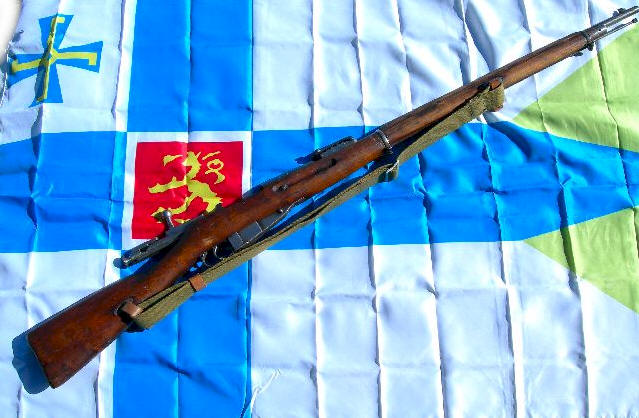
After declaring their
independence from Russia on the 6th of December in 1917, the Finns
built a standing army equipped with captured Mosin Nagants left behind
in warehouses in Helsinki. Both the Army and the Protective Corps
(Suojeluskuntain Ylieskunnan or Sk.Y ) selected the Mosin Nagant as the
standard infantry weapon. This love affair with the Mosin Nagant would
last well into the post W.W.II era, marking one of the longest service
cycles for any military bolt action rifle. I am not the expert on the
Finn Mosin Nagant and for further historic perspective, I would suggest
that you visit the Finn section of Mosin Nagant dot Net.
Kivääri
M/91-Model 1891 Infantry rifle

Photo Courtesy of Empire Arms
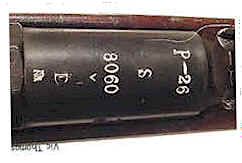
Kivääri
M/91 P-26

Data & Facts
Produced from 1918 - circa
1943
Russian Arsenals - Tula,
Ishevsk, Sestroretsk,Chatterault, Westinghouse, Remington
Finnish Arsenals, Tikka, VKT
Models:
SAT Riihimaki M91 - 1922-1924
P-25, P-26, and P-27 -
1925-1927
Early Tikka M91 - 1925-1927
B barrel M91 - 1942
VKT - 1940-1942
Tikka Late Production -
1940-1943
The Finns made steady
improvements to the M1891 by using an improved stock, changing front
sight blades, different sling attachments, Finn produced barrels and
some barrels were relined with the Salerno method as illustrated above
with the P-26.
Stats
Length: 1288 mm w/out bayo
Weight (unloaded): 4.06kg
Barrel: 760mm, 4 groove,
right-hand twist
Magazine: 5 round integral
box
Rate of Fire: Bolt-action, 10
- 12 rounds per minute
Caliber: 7.62x54Rmm
vintovochnyi patron obr 1891g
Muzzle Velocity: 615mps
Kivääri
M/24-Model 1924 Civil Guard rifle
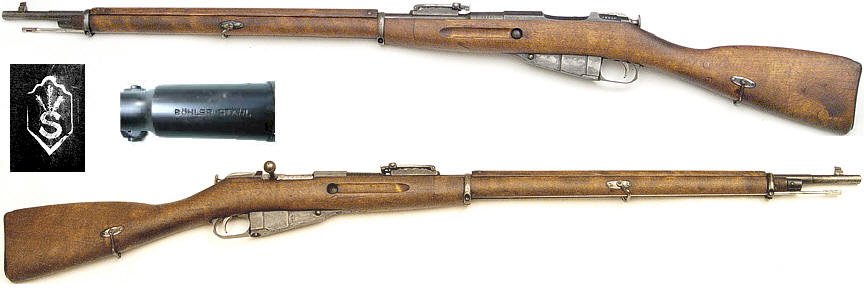
Photo Courtesy of Empire Arms
Data & Facts
Produced by SAKO,1923-1927
Receivers made by - Tula,
Ishevsk, Sestroretsk,Chatterault, Westinghouse, Remington
Has a unique stepped barrel.
Basically a rebarreled M91
with changes to the stock and sights.
Barrels produced by
Schweizerische Industrie Gesellschaft of Switzerland, Venus Waffenbrink
Oscar Will group of Zella-Mehlis and Bohler-Stahl of Germany.
Known as the Lotta Rifle.
Stats
Length: 1300 mm
Weight (unloaded): 4.02kg
Barrel: 818mm, 4 groove,
right-hand twist
Magazine: 5 round integral
box
Rate of Fire: Bolt-action, 10
- 12 rounds per minute
Caliber: 7.62x54Rmm
vintovochnyi patron obr 1891g
Muzzle Velocity: 880 mps
Kivääri
M/27-Model 1927 rifle
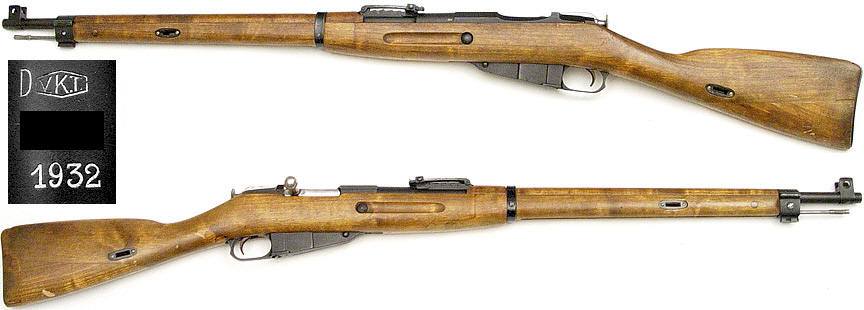
Photo Courtesy of Empire Arms
Data & Facts
Valtions Kivaaritedhas,
Jyvaskyla, 1927-1939
Receivers made by - Tula,
Ishevsk, Sestroretsk,Chatterault, Westinghouse, Remington
Produced as a standard
infantry rifle and adapted in a carbine version for ski troops.
Some sources describe these
rifles as shortened versions of the M/24 . The M/27 standard rifle was
a model unto itself, being newly designed. The barrels were all made by
Tikka except for a couple of thousand (2150) made by VKT in 1931-32.
The "short version" should be referred to as a M27 Muskatoon or M27 Ski
Trooper. The stocks are different from the M/24, as was the hand guard.
The nose cap was hinged like that of the German Kar.98AZ and carried a
bayonet lug.
Stats
Length: 1185 mm
Weight (unloaded): 4.02kg
Barrel: 818mm, 4 groove,
right-hand twist
Magazine: 5 round integral
box
Rate of Fire: Bolt-action, 10
- 12 rounds per minute
Caliber: 7.62x54Rmm
vintovochnyi patron obr 1891g
Muzzle Velocity: 740 mps
Sk.Y
Kivääri M/28-rifle, Protective Corps
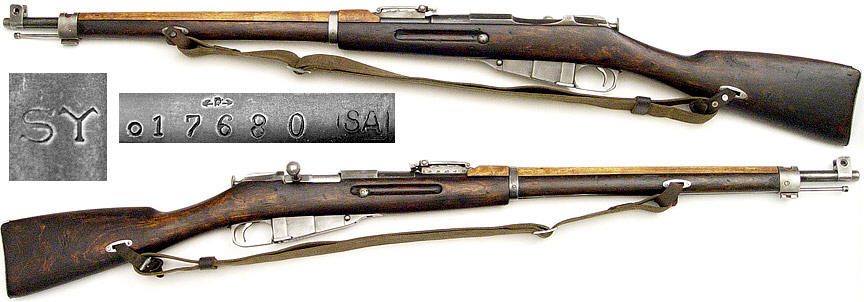
Photo Courtesy of Empire Arms
Data & Facts
Suojeluskuntain Ase-ja
Konepaja Osakeyhtio (Sako), Riihimaki, 1927-1930
Receivers made by - Tula,
Ishevsk, Sestroretsk,Chatterault, Westinghouse, Remington
Some of these feature a
double sling slot in the buttstock.
Adopted in August, 1927, the
M/28 was an all together new design in response to the Army's new M27
Developed by Niilo Talevnheimo, the principal arms inspector of the
Protective Corps. The barrel was shortened, the depth and pitch of the
rifling changed, the trigger was improved and the stock was changed.
The rifles were assembled at the Sako factory using new SIG made
barrels. Some barrels were made by Tikka as well. They had a single
barrel band and simple nose cap. The rear site was re-graduated to 850
meters.
Stats
Length: 1185 mm
Weight (unloaded): 4.18kg
Barrel: 685 mm, 4 groove,
right-hand twist
Magazine: 5 round integral
box
Rate of Fire: Bolt-action, 10
- 12 rounds per minute
Caliber: 7.62x54Rmm
vintovochnyi patron obr 1891g
Sk.Y
Kivääri M/28/30-rifle, Protective Corps

Data & Facts
Suojeluskuntain Ase-ja
Konepaja Osakeyhtio (Sako), Riihimaki, 1927-1930
Receivers made by - Tula,
Ishevsk, Sestroretsk,Chatterault, Westinghouse, Remington
A ski trooper model was
produced as well
The M/28-30 was a continued
development of the M/28. There was recognized a need to replace the old
Russian designed sight. Harry Masner an Arms Inspector assigned to the
Civil Guard undertook the project in 1930. The sight design was
accepted and put into production in 1933. Changes were also made to the
rear band and handguard to accommodate the new sight base. An improved
magazine was added with two "dimples" pressed into the top of the
magazine body to prevent feeding problems. These magazines were marked
with the letters HV in the side. An adjustable front sight was added
and improvements made to the barrel channel for accuracy.
Lapin,Vic Thomas et.al.
Stats
Length: 1185 mm
Weight (unloaded): 4.18kg
Barrel: 685 mm, 4 groove,
right-hand twist
Magazine: 5 round integral
box
Rate of Fire: Bolt-action, 10
- 12 rounds per minute
Caliber: 7.62x54Rmm
vintovochnyi patron obr 1891g
Kivääri
M/39 Rifle
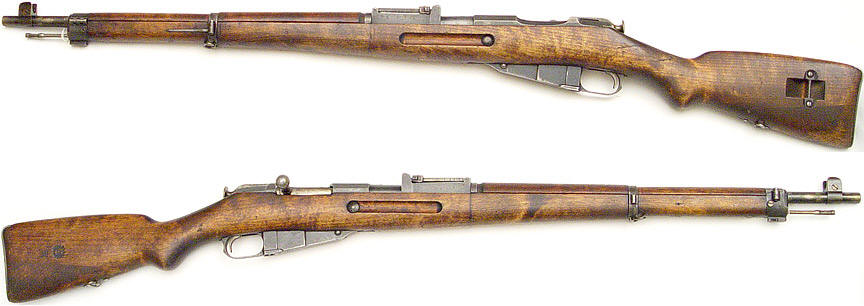
Photo Courtesy of Empire Arms
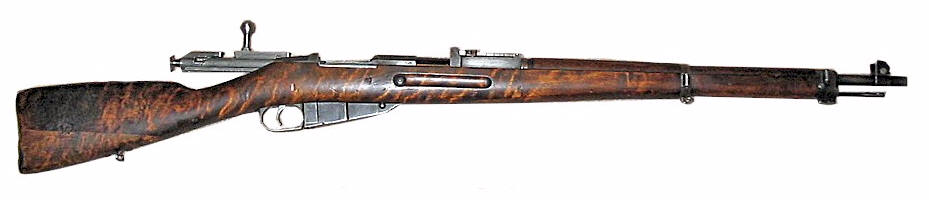
Straight Stock M39
Data & Facts
Made by VKT, SAKO and SkY
1939 - 1944
B-barrel - 1942
Receivers made by - Tula,
Ishevsk, Sestroretsk,Chatterault, Westinghouse, Remington
A later production in the
60's was introduced to the US collectors market.The M39 is easily
recognizable for it's pistol grip stock. The straight stock variant was
only produced in 1941 by SAKO and is considered as highly collectable.
Another very collectable variant is the B-barrel so named because the
barrel is not arsenal stamped but rather has a distinctive B marking
that denotes the barrel is made by Leige Belgium.
Stats
Length: 1185 mm
Weight (unloaded): 4.55 kg
Barrel: 685 mm, 4 groove,
right-hand twist
Magazine: 5 round integral
box
Rate of Fire: Bolt-action, 10
- 12 rounds per minute
Caliber: 7.62x54Rmm
vintovochnyi patron obr 1891g
Kivääri
M91/30 Infantry Rifle
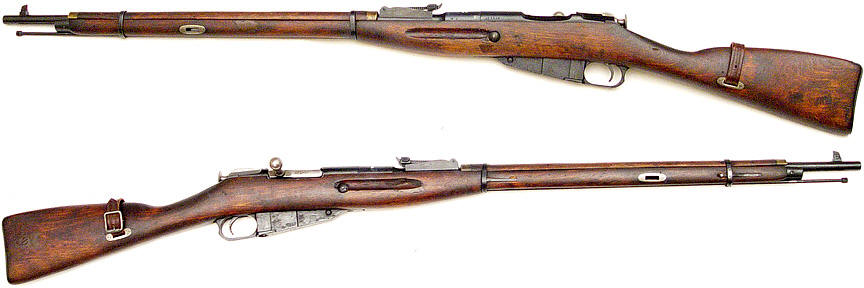
Photo Courtesy of Empire Arms
Data & Facts
Made by Tikka, Izhesvsk and
Tula
Receivers made by - Tula,
Ishevsk, Sestroretsk,Chatterault, Westinghouse, Remington
The Tikka round receiver is
considered very collectable
The Finnish 91/30 was a
virtual redesign of the Russian original when you consider that the
barrels, sights and stocks were all changed. The Barrels came from such
famous makers as Tikka and the stocks are sturdier 2-piece finger
jointed. A blade replaced the post and globe front sight. The bedding
pillar in the stock is often shimmed and the trigger group sometimes
reworked.
Stats
Length: 1218mm
Weight (unloaded): 3890 kg.
Barrel: 730 mm, 4 groove,
right-hand twist
Magazine: 5 round integral box
Rate of Fire: Bolt-action, 10
- 12 rounds per minute
Caliber: 7.62x54Rmm
vintovochnyi patron obr 1891g
Muzzle Velocity: 860 mps
Model 28-76 Mosin Nagant
military match rifle
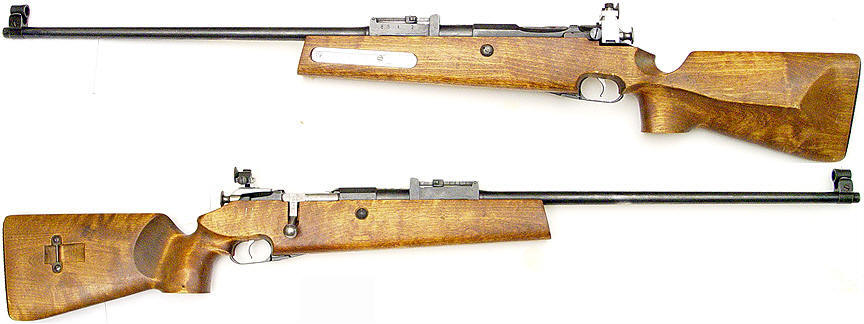
These
are Finn military Mosin Nagant match rifles as used until just recently
by the Finnish Defense Forces. They were constructed from
Finn Model 28/30 military 7.62x54R rifles by the Finnish military with
hexagonal receivers, turned-down bolts, match triggers and Lyman-style
aperture sights. The butt-stocks are made of Finnish birch with
built-in cheek-rests and are specially bedded to each action. There are
aluminum rails on the left side and the bottom of forend for mounting
of accessories such as palm-rests and slings.
For more detailed
information, consult with Doug Bowser, who is undeniably one of the
foremost authorities on the history of the Finnish Mosin Nagant. Also,
visit Tuco's Forum for more information. Mosin
Nagant dot Net has one of the most concise
Finnish weapons sections on the web.
Editorial
assistance was provided by our friend "Vic" who is often found on
Tuco's Forum. His assistance has been invaluable.
|



