|
Restoration Ethics - A
Survey of Museum Curators
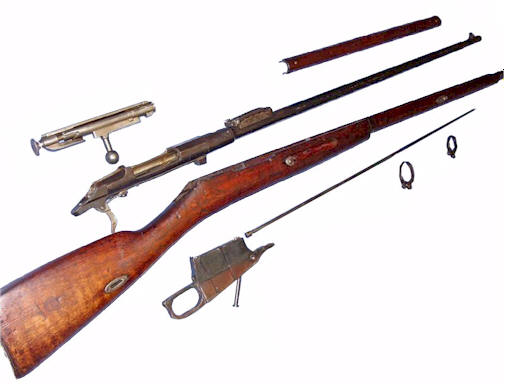
I
recently surveyed a number of curators of military museums from western
Europe about their views on firearms preservation and restoration. The
primary theme that ran through each response was that in collecting or
owning historic firearms was to preserve, conserve and protect. This
article is intended to expand upon these concepts and to apply them to
non-museum community.
If you have read the other material in the Preservation section of this
website, you know that surplus military firearms are more than just
throw away antiquated inventory. These firearms are surviving
historical artifacts that are symbolic of significant events in modern
history. You also learned that supplies of these firearms are finite
and dwindling fast. Indeed some have all but disappeared. Understanding
the preservation of these firearms and the associated ethics and
standards of their care is important to ensuring their survival for
generations to come.
The
following is a sample of the responses I received:
Concerning
weapons, it is advisable to ere on the less is better side. It is more
important to maintain an artifact's current condition then to modify it
by extensive cleaning and repair. stabilization is the correct goal, as
the piece could eventually be treated by a professional conservator
with far more knowledge and skill than you of myself. As far as
restoring an altered piece to its original intended use, you would have
to decide if the conversion represents a significant historical act
which is important enough to preserve, and do other examples exist
which display the same modification. Again advice would be to only do
what can be reversed. Minor cleaning of metal and wood surfaces is
allowable as long as components are not damaged, materials are not
removed, and characteristics such as markings or grooves are not
altered. I hope this information is of some help. You may wish to
contact Mr. Les Jensen, who is the Firearms Curator at the West Point
Museum. His email is leslie.jensen@us.army.mil
Good Luck in you efforts.
Sincerely,
Steven Ruhnke
Curator,
AD Museum
DSN 485-6349
The significant point here is the philosophy of "doing no harm" when it
comes to historically significant military firearms. Of course the
writer is referring to exceptionally rare firearms when writing "the
piece could eventually be treated by a professional conservator with
far more knowledge and skill than you or myself." However,
the overall message is a minimalist approach to cleaning up a new
acquisition. When the writer stated "you would have to decide
if the conversion represents a significant historical act which is
important enough to preserve, and do other examples exist which display
the same modification." He was referring to my specific
question about the ethics of "restoring" ex-sniper rifles. Mr. Ruhnke
makes the point that if Mosin Sniper rifles were extremely rare or
nearly non-existent, it might be justified but normally not. Clearly
there are plenty examples of these rifles on the current market and in
collections. He follows this with a caution that you should only alter
what could be returned to the original condition. This basically
dictates that an ethical "restoration" of an ex-sniper is impossible
due to the necessary removal of wood and metal involved.
The next response continues to
support the theme of preservation:
Thank you for your enquiry on the
conservation and preservation of military small arms.
There are no hard and fast rules
for conservation, you have to make a decision based on your own
requirements. Saying that, in museums there are certain
things that we would take in to consideration. The following
is what I would do, and what we do at Derby Museum.
First of all decide why you want
to conserve the item. Is it for display, or just to prevent
further deterioration whilst in storage? One of the most
important things with conservation is to know when to stop, the item
may be 100 years old - should it look like it was made yesterday?
Secondly you need to determine scarcity and importance. If
you restore this item, which may involve replacing original parts with
replica parts, are there others in original condition (with all
original parts)? Thirdly, history of the item. Was the damage
caused by use of the weapon in battle? If so, the damage is
an intrinsic part of the object's history and so restoration should be
kept to a minimum. If it was damaged due to poor storage in
recent years, then there is a good case for restoring the object rather
more. Fourthly, how much work needs to be done? Some items
are beyond repair, it may need so much work that by restoring it you
are in fact creating a new item. (The usual example is a
clock - to have it working as it would have been in it's 'lifetime'
(before becoming a museum object) will cause wear and new parts will be
required to replace old ones - at some point you may be left with a
mechanism that is wholly replica/replacement parts, with none of the
original item remaining.)
The historical value of an item
is the main concern in museums, so I would usually opt for conservation
work that would stabilize the object and prevent further
deterioration. If there were a number of items the same, one
would be selected for display and restored to show how it would have
looked when it was in use.
All of the weapons at the Museum
have been made safe (so they cannot be used for their intended
purpose), perversely, after what I have just been saying, permanently
altering their state. However, this is a moral &
security judgment that has been made - one, which I have to say, I
agree with. So we would never have a weapon restored to
working order.
One last thing, all conservation
work that is carried out on museum objects should be reversible, and
visible. We are not trying to trick people, but equally a
little bit of conservation can help people to appreciate and understand
objects better. For example, a WW1 battle dress blouse has
recently been conserved, the moth damage has been lightly patched from
underneath with a matching coloured material. You can still
see that there has been some moth damage, but it no longer draws your
attention away from the object itself.
There are a fair few things to
think about there, and really that's the point, if the object belongs
to you, you have to decide how much or little work you want done on
it. I cannot advise on the effect that conservation will have
on value, but you should always be open about repairs, as I am sure you
appreciate others being. You should always maintain conservation
records and keep the conservators report of work that they have carried
out on the object. This is important because materials used
today that are assumed not to harm the object, may, in the future, be
found to damage them. If you know how your artifacts have
been treated and with what substances, then you can save yourself some
headaches in the future.
The UK Institute for Conservation
(UKIC) has some advice on Conservation Treatment - they have a web site
that may help you. If not, I can photocopy a page on it from
their members handbook and send it to you - please supply you postal
address for this.
For practical advise on
conserving weapons, or preservation methods that you can carry out your
self, I would consult with a specialist conservator, or you could try
contacting the Royal Armouries Museum, Leeds, who have a conservation
department: tel 0113 220 1999, enquiries@armouries.org.uk.
All the best
Vivienne.
Vivienne Rudd
Assistant
Keeper of Military and Social History
Derby Museum and Art Gallery
The Strand
Derby
DE1 1BS
tel 01332 716656
Aside from the writer's belief in demilling firearms which she
shamelessly admits is a contradiction to the spirit of preservation,
she reinforces the concept of minimalism, preservation and
conservation. Her comment, "One of the most important things
with conservation is to know when to stop, the item may be 100 years
old - should it look like it was made yesterday?" is telling
in that so many new collectors seem to want to make their rifles look
like new when it really removes the history and character of the
firearm. Note the strong caution regarding the documentation of any
repairs or changes made to the object being preserved. Also consider
the note regarding materials used. Every effort should be made to use
period materials and techniques.
The final response I am including in this article is short but very
straight to the point and seems to sum everything up:
As a general rule, the purpose of
conservation is to freeze time and stabilize the condition of the
object in order to avoid further deterioration. Having that in mind,
the sniper rifle should be conserved as it is and not be restored to
its original condition as if it was new. Such a restoration would have
meant the destruction of a large part of the weapon's history and
importance.
I hope this is of some
assistance.
Yours sincerely
Sophie Stathi
Department
of Weapons, Equipment and Vehicles
Ms Stathi used just a few sentences to make a powerful argument for
preservation. She doesn't mince words when she cautions against
"restoring" an ex-sniper!
You can clearly see that these professionals strongly advocate the
preservation and conservation of historic firearms. We should all draw
a lesson from their advice. They are in the business of preserving the
last remnants of historical artifacts because time, carelessness and
commercialization has made historic artifacts nearly extinct. The same
is happening to the rifles you own, collect or shoot. I hope this short
bit of research opens some eyes to the importance of collecting ethics
and practices that will keep these historic firearms around for
generations to come!
Restoration
& Preservation Ethics
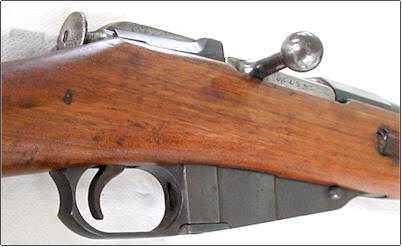
Americans
are instinctively tinkers and innovators. When ever we find something
old we love to fix it up. We are no different with historic battle
rifles like the Mosin. However, we need to consider an important fact.
These pieces of history are not around in infinite numbers. It is easy
to believe that an endless supply exists when you see the ads of almost
every major distributor in the United States. Another factor that
shapes the belief that they are not so scarce is their relatively low
price compared to other collectable historic rifles. For some reason,
mostly related to economic myths, we equate low cost and high
availability with a large supply. However, that could not be farthest
from the truth.
These
rifles are a gift from the past and should be seen as unique historic
artifacts. For the most part, these rifles have seen active service
during major historic periods from the Russian Revolution to the Soviet
occupation of Afghanistan. The Soviets kept very few firearms in
contingency storage as they had to equip large standing armies and
reserve forces as well as provide arms to their Warsaw Pact allies.
If we
can agree that these weapons are historically significant and that some
day there will be no more imported, then we can discuss their
preservation. I have presented a section on restoration because I
believe that firearms differ from antiques in preservation. In the
antique world, an artifact is left as it is found. One does not clean
it or refinish it or replace broken parts. A great deal is made about
the “patina” of a certain item and its value is directly tied to the
existence of its original finish. For years, firearms collectors
adopted the same standards. I believe that this was because early on,
the collectors were in fact avid antique collectors as well. It was
only natural that they use the same standards for collecting guns.
 The idea was
that by leaving the original finish, a fair value could be established
for the item based on grade or condition. Also, with many types of
firearms, it prevented the falsification of serialized parts. This
system may have worked well for other firearms but it doesn’t fit well
with a firearm that has remained in service from the late 1890’s to the
mid 1980’s. As many of know the Soviets let nothing go to waste. They
did not have the manufacturing base to treat firearms as disposable
items. As new models of Mosin rifles went into production, rather than
manufacture completely new receivers, they simply parted the receivers
out on unserviceable rifles and used them. They had little regard for
ensuring that individual components remained serialized. Therefore is
the exception to find a Mosin that is matching from tang date to barrel
date, manufacturing of all parts and in all serialized parts. It is
even more difficult to find one like this that has not been refurbished
at least once. As a result, there is little value in using the
antiquated collecting standards with these rifles. The idea was
that by leaving the original finish, a fair value could be established
for the item based on grade or condition. Also, with many types of
firearms, it prevented the falsification of serialized parts. This
system may have worked well for other firearms but it doesn’t fit well
with a firearm that has remained in service from the late 1890’s to the
mid 1980’s. As many of know the Soviets let nothing go to waste. They
did not have the manufacturing base to treat firearms as disposable
items. As new models of Mosin rifles went into production, rather than
manufacture completely new receivers, they simply parted the receivers
out on unserviceable rifles and used them. They had little regard for
ensuring that individual components remained serialized. Therefore is
the exception to find a Mosin that is matching from tang date to barrel
date, manufacturing of all parts and in all serialized parts. It is
even more difficult to find one like this that has not been refurbished
at least once. As a result, there is little value in using the
antiquated collecting standards with these rifles.
Since the old standards don’t as a rule apply, then
it stands to reason that restoration if done correctly would not
diminish the value of a Mosin rifle. That being said, there are still
some ethical points to consider. Where do you draw line between a
restoration and a remanufacturing of a historic firearm?
I have
chosen to use the same standard as many military museums. The rule of
thumb is to restore the piece to its original condition upon retirement
from service. That means that if an airplane was retired as troop
carrier but once was a bomber, it is restored as a troop carrier. If a
tracked vehicle was retired as an artillery platform but once was a
tank, it is restored as an artillery platform. The point is that the
history of the artifact is not being changed by the restoration.
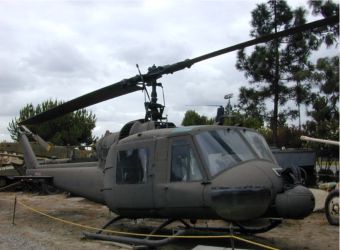 In terms of the
actual restoration process, care is taken to use what period
appropriate materials are still available today. In doing so, great
care is taken to craft those materials in period fashion. If an
aircraft skin was riveted, it was not welded. If a gun carrier was
painted by brush, it is not spray painted. If parts are missing, it is
preferable to remanufacture those parts using period technique. Of
course this is not always possible if items were forged using
techniques that no longer exist. In that case, the parts are produced
with the same look and feel as the period forging. Nothing gets
re-serialized unless it is a regulatory requirement like in the case of
airframe components. In terms of the
actual restoration process, care is taken to use what period
appropriate materials are still available today. In doing so, great
care is taken to craft those materials in period fashion. If an
aircraft skin was riveted, it was not welded. If a gun carrier was
painted by brush, it is not spray painted. If parts are missing, it is
preferable to remanufacture those parts using period technique. Of
course this is not always possible if items were forged using
techniques that no longer exist. In that case, the parts are produced
with the same look and feel as the period forging. Nothing gets
re-serialized unless it is a regulatory requirement like in the case of
airframe components.
To me,
these same standards should apply to firearms. If you choose to restore
a Mosin, then do so with period parts, materials and techniques. Don’t
fake serial numbers or markings and don’t restore the rifle to
something it was not when it retired. Above all, record and disclose
all restorations when it comes time to sell the rifle. When selecting
finishes, consult with knowledgeable people as to the correct period
finish and application techniques. The rule of thumb regarding
refinishing a firearm is that you should only do enough to repair any
obvious damage or to remove a finish that was applied recently and
improperly.  This
does not include the shellac used on Soviet firearms for long term
storage. The shellac is correct for the rifle since it was applied
during its service life and retired that way. A big area of contention
has been re-bluing rifles. This is somewhat of a gray area as little is
known about the standard bluing process used by the Russians and the
Finns. It is a sure bet that the processes used today are not the same
as those used 50 or 70 years ago. I would caution against re-bluing
unless you are reasonably sure that it can approximate the same method
and then only if it is absolutely necessary. Cold blue touchups are
acceptable in my mind to eliminate surface rust that is working its way
into the metal. This
does not include the shellac used on Soviet firearms for long term
storage. The shellac is correct for the rifle since it was applied
during its service life and retired that way. A big area of contention
has been re-bluing rifles. This is somewhat of a gray area as little is
known about the standard bluing process used by the Russians and the
Finns. It is a sure bet that the processes used today are not the same
as those used 50 or 70 years ago. I would caution against re-bluing
unless you are reasonably sure that it can approximate the same method
and then only if it is absolutely necessary. Cold blue touchups are
acceptable in my mind to eliminate surface rust that is working its way
into the metal. 
Another
thing to consider is that like or not, the current thinking on
collectable rifles still parallels the “antiques” mentality. If your
rifle is a collectable piece, it would be wise to be very careful about
doing any restoration work on it if you plan to sell it in the future.
This
article is offered as “food for thought” and is not an authoritative
work. It merely expresses my thinking on the ethical concerns of
restoration. I would urge anyone who is thinking of restoring their
rifle to discuss it first on the forums and get other people’s input.
|



